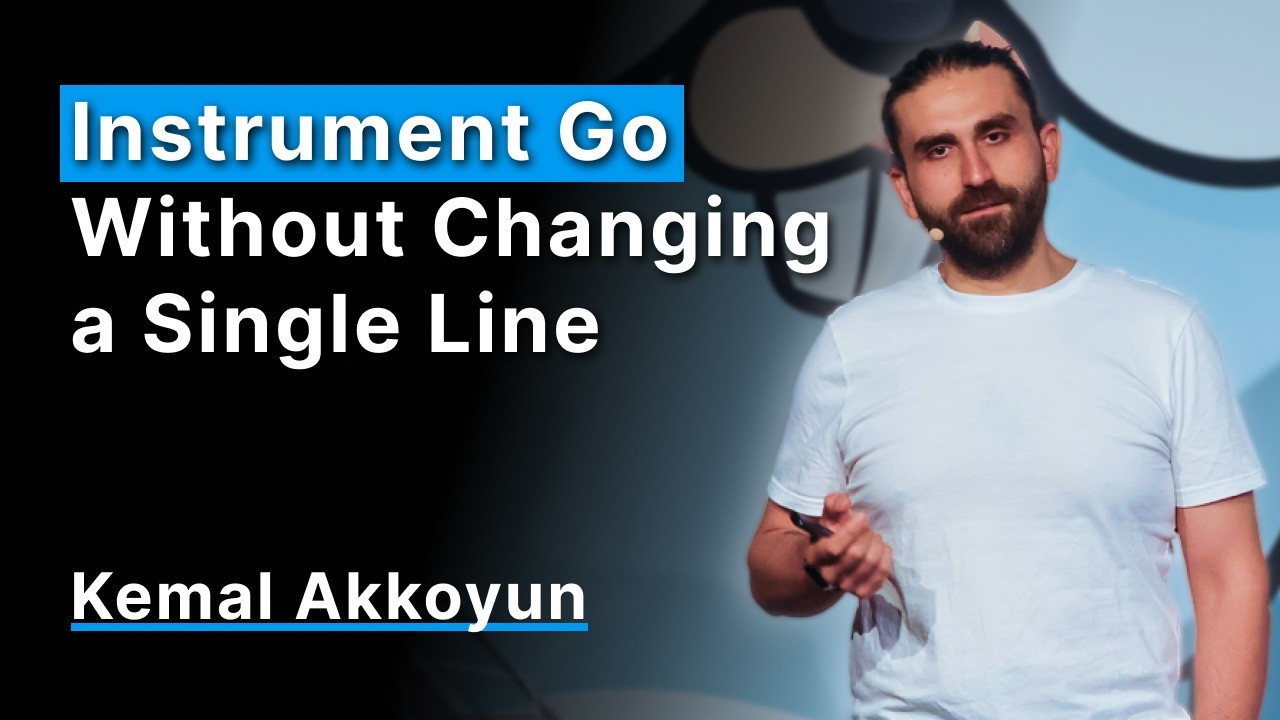
How to Instrument Go Without Changing a Single Line of Code

talk: How to Instrument Go Without Changing a Single Line of Code

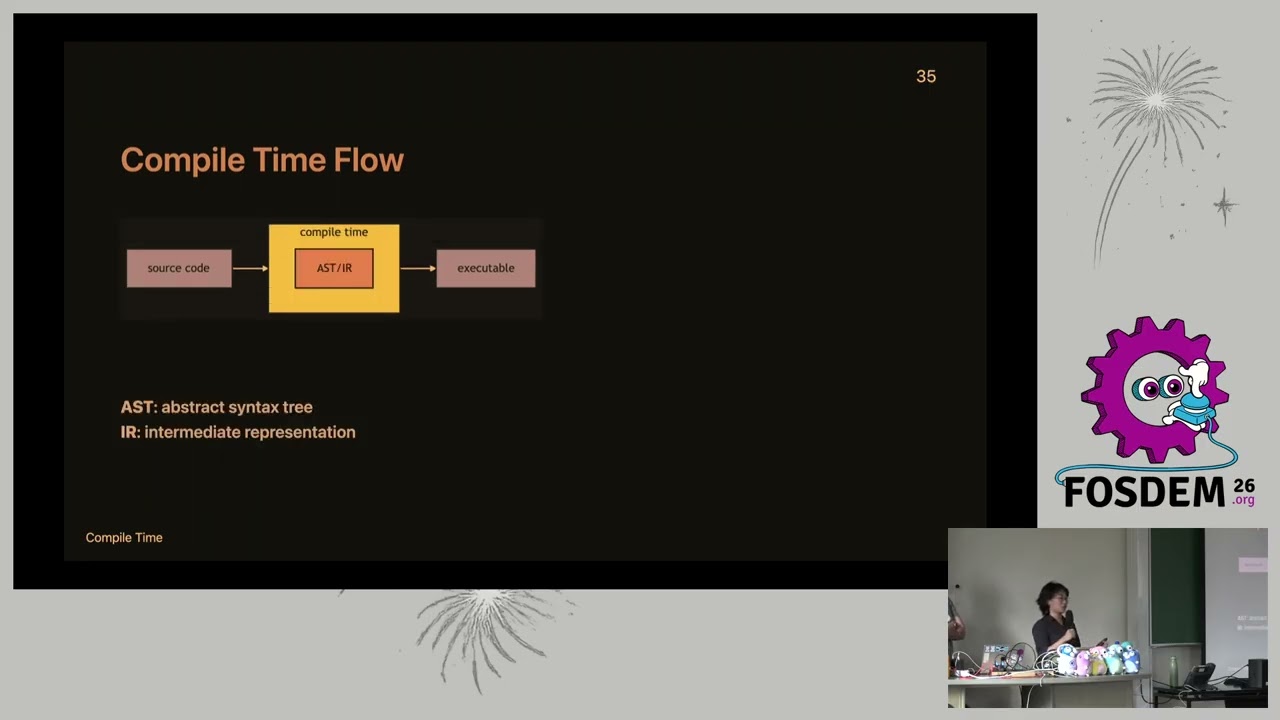
Zero-touch observability for Go is finally becoming real. In this talk, we walk through the different strategies you can use to instrument Go applications without changing a single line of code, and what they cost you in terms of overhead, stability, and security. We compare several concrete approaches and projects: eBPF-based auto-instrumentation using OpenTelemetry’s Go auto-instrumentation agent and OBI (OpenTelemetry eBPF Instrumentation), compile-time manipulation using tools like Orchestrion and the OpenTelemetry Compile-Time Instrumentation SIG, runtime injection via Frida/ptrace, and USDT (User Statically-Defined Tracing) probes — both via libstapsdt and a custom Go runtime fork. ...

February 1, 2026 · 2 min · 216 words · Kemal Akkoyun
How to Reliably Measure Software Performance

talk: How to Reliably Measure Software Performance

Measuring software performance reliably is remarkably difficult. It’s a specialized version of a more general problem: trying to find a signal in a world full of noise. A benchmark that reports a 5% improvement might just be measuring thermal throttling, noisy neighbors, or the phase of the moon. In this talk, we walk through the full stack of reliable performance measurement — from controlling your benchmarking environment (bare metal instances, CPU affinity, disabling SMT and dynamic frequency scaling) to designing benchmarks that are both representative and repeatable. We cover the statistical methods needed to interpret results correctly (hypothesis testing, change point detection) and show how to integrate continuous benchmarking into development workflows so regressions are caught before they reach production. ...

February 1, 2026 · 2 min · 218 words · Kemal Akkoyun
Unleashing the Go Toolchain

talk: Unleashing the Go Toolchain

The -toolexec flag hides a super-power in the Go toolchain: it lets you turn every go build into a programmable pipeline. In this session we’ll reveal how a simple wrapper command can inject custom analysis, code generation, and instrumentation—without changing a line of application code. You’ll see how platform and tooling teams use -toolexec to weave organisation-wide practices directly into the build, from enforcing error-handling standards to automatically adding observability hooks. We’ll map the journey from a “hello-world” wrapper to full Aspect-Oriented compile-time transformations, and discuss the trade-offs that come with this new power. ...

August 14, 2025 · 1 min · 188 words · Kemal Akkoyun
Best Practices and Pitfalls of Instrumenting Your Cloud-Native Application

talk: Best Practices and Pitfalls of Instrumenting Your Cloud-Native Application

Observability is crucial for understanding how your application operates in real-time. Among various observability signals—such as logs, traces, and continuous profiling—metrics play a significant role. They provide sampled measurements throughout the system, essential for ensuring service quality, improving performance, scalability, debuggability, security, and enabling real-time, actionable alerting. Building observable applications begins with proper instrumentation. While the Prometheus ecosystem offers tools that simplify this process, there are still numerous opportunities for mistakes or misuse. ...

November 8, 2022 · 1 min · 174 words · Kemal Akkoyun
eBPF? Safety First!

talk: eBPF? Safety First!

eBPF being a promising technology is no news. And C is the defacto choice for writing eBPF programs. The act of writing C programs in an error-prone process. Even the eBPF verifier makes life a lot easier; it is still possible to write unsafe programs and make trivial mistakes that elude the compiler but are detected by the verifier in the load time, which are preventable with compile-time checks. It is where Rust comes in. Rust is a language designed for safety. Recently the Rust compiler gained the ability to compile to the eBPF virtual machine, and Rust became an official language for Linux. We discover more and more use cases where eBPF can be helpful. We find more efficient ways to build safe eBPF programs that are parallel to these developments. We will demonstrate how we made applications combined with Rust in the data plane for more safety and Go in the control plane for a higher development pace to target Kubernetes for security, observability and performance tuning. ...

May 10, 2022 · 1 min · 181 words · Kemal Akkoyun