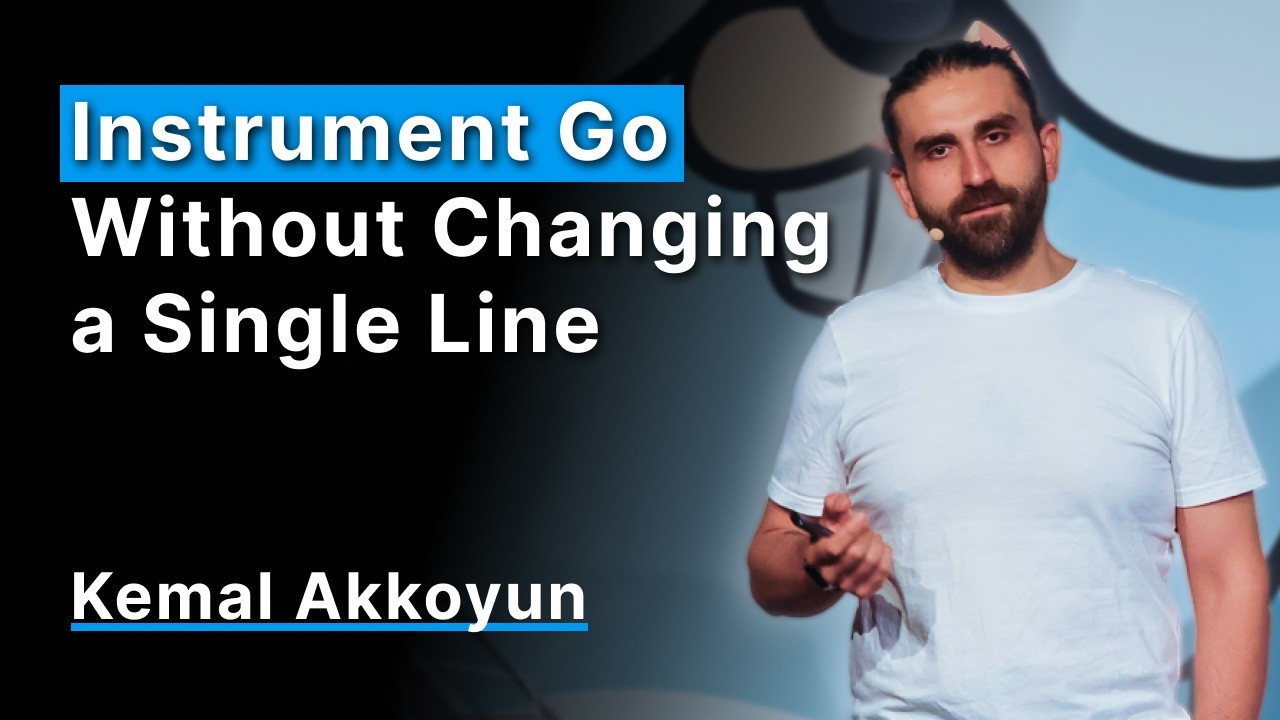
Instrument Go Without Changing a Single Line
Talks · · 3 min

talk: Instrument Go Without Changing a Single Line

The debugging loop is slow. You cannot reproduce the bug locally, so you add a log line and redeploy. Wrong place. You do it again. An agent alone does not fix this: it still has to pick a mechanism, and it has to know what that mechanism costs. This talk is about three approaches that take the source edit out of that loop. Each acts at a different point in the software lifecycle, and each inherits the strengths and constraints of its intervention point. ...
August 13, 2026 · 3 min · 447 words · Kemal Akkoyun
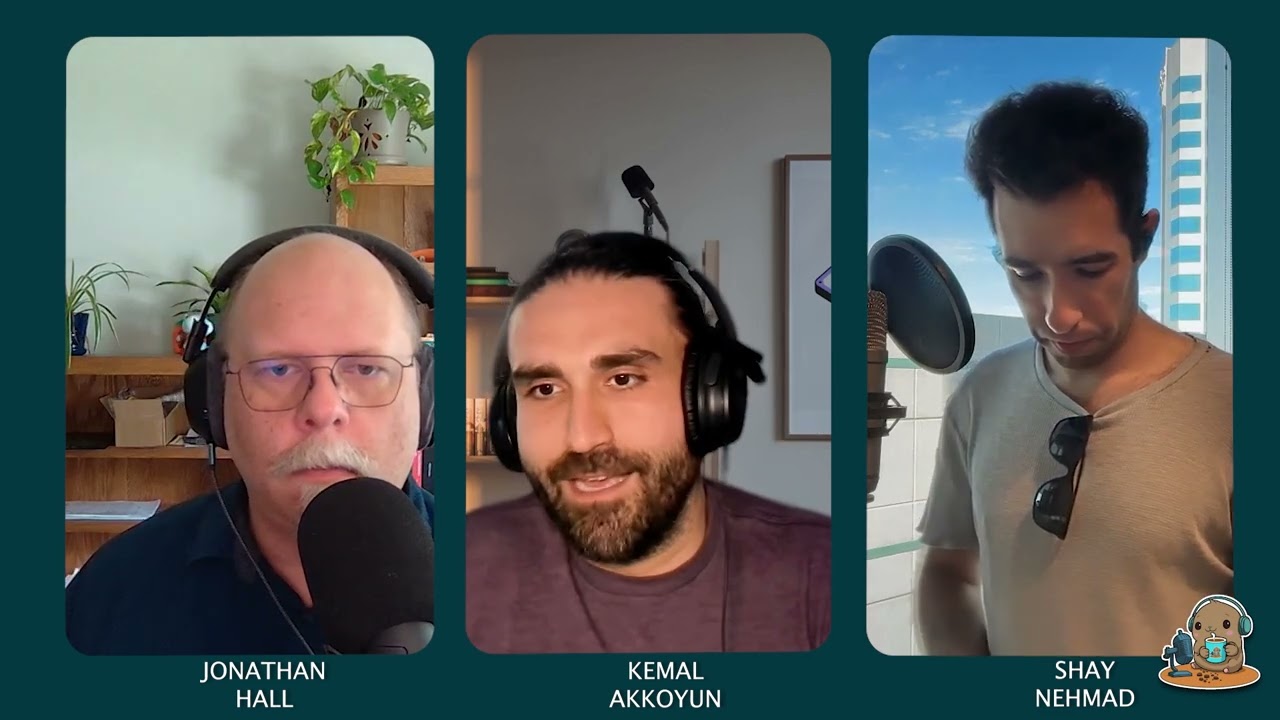
Jonathan Hall, Kemal Akkoyun and Shay Nehmad recording an episode of Cup o' Go
Talks · · 2 min

podcast: Cup o' Go — Instrumentation and Blast Radius

Jonathan Hall and Shay Nehmad had me on Cup o’ Go for episode 167, straight after their GopherCon US recap. We spent about forty minutes on instrumentation: what an APM tool is actually measuring, and the three ways you can get telemetry out of a Go program without asking every team to rewrite their handlers. The part I enjoyed arguing about most was blast radius. Manual instrumentation is precise and tedious, and it never finishes. eBPF buys you one agent covering every language on the box, at the cost of running code in the kernel, where a bad program can take the whole host down with it. Compile-time instrumentation rewrites the syntax tree behind go build through the -toolexec hook, which keeps failures scoped to one service and works anywhere Go compiles. People love this dark magic, which I find either reassuring or alarming depending on the day. ...

August 11, 2026 · 2 min · 336 words · Kemal Akkoyun
Engineering · · 9 min

Making zero-touch Go observability agent-actionable

You can’t reproduce the bug locally, so you add a log line and redeploy. Wrong place. You add another one and redeploy again. That is the debugging loop from my GopherCon UK talk, and in this last part we’re going to shorten it: a decision rule for two zero-touch tools, then a runbook an AI coding agent (not a Java-style one) can execute. The runbook starts with one boring question: is this Go service already running, or can I rebuild it? If the service has to stay untouched, OBI (OpenTelemetry eBPF Instrumentation) is the default. If I can rebuild it and need function-level spans, otelc (OpenTelemetry Go compile-time instrumentation) is the default. The rest of the decision tree is checking privileges, Go version, collector endpoint, and whether RED metrics are enough. ...

August 6, 2026 · 9 min · 1898 words · Kemal Akkoyun
Engineering · · 9 min

Go runtime futures: flight recording, USDT, and the instrumentation hook problem

Every route in this series goes around the Go runtime: rewrite the source at build time, inject something at process start, or watch from the kernel, because Go gives us no agent API to plug into. This time we ask the runtime what it could hand us. The honest summary for 2026: one long-awaited feature shipped, two open proposals document gaps that have caused real production problems for years, and two experiments of mine are aspirations, not proposals. ...

July 30, 2026 · 9 min · 1826 words · Kemal Akkoyun
Engineering · · 7 min

Context across goroutines and connections

We’re going to follow one request, GET /orders/42, and ask what “propagation” means at each hop. Three different jobs hide behind that word, the tools in this series do different ones, and the request’s own data falls into the gaps between them. The cheapest way to see a gap is a short Go program. This is a companion to the How to Instrument Go Without Changing a Single Line of Code series, between Part 4 and Part 5. The series accompanies my GopherCon UK talk. Part 1 showed tools hacking a field into g. Here we look at what that field holds, what it can’t, and who does the rest. ...

July 27, 2026 · 7 min · 1409 words · Kemal Akkoyun