Auto-Instrumenting Go

Auto-Instrumenting Go: From eBPF to USDT Probes

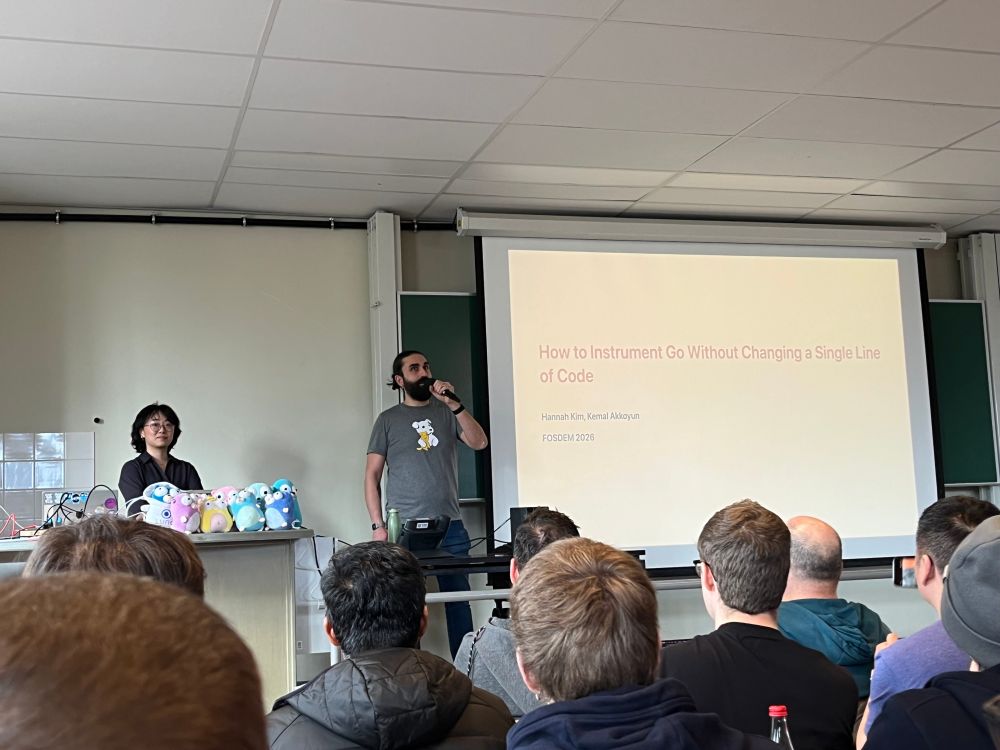
This post expands on the FOSDEM 2026 Go Devroom talk I co-presented with Hannah S. Kim. The talk, demo code, and all benchmark scenarios are available in the fosdem-2026 repository. The Problem Go is one of the best languages for building production backend services. It compiles to native binaries, has excellent concurrency primitives, and produces predictable performance characteristics. But when it comes to auto-instrumentation — adding observability without modifying source code — Go is uniquely difficult. ...

February 27, 2026 · 12 min · 2385 words · map[email:kakkoyun@gmail.com name:Kemal Akkoyun]
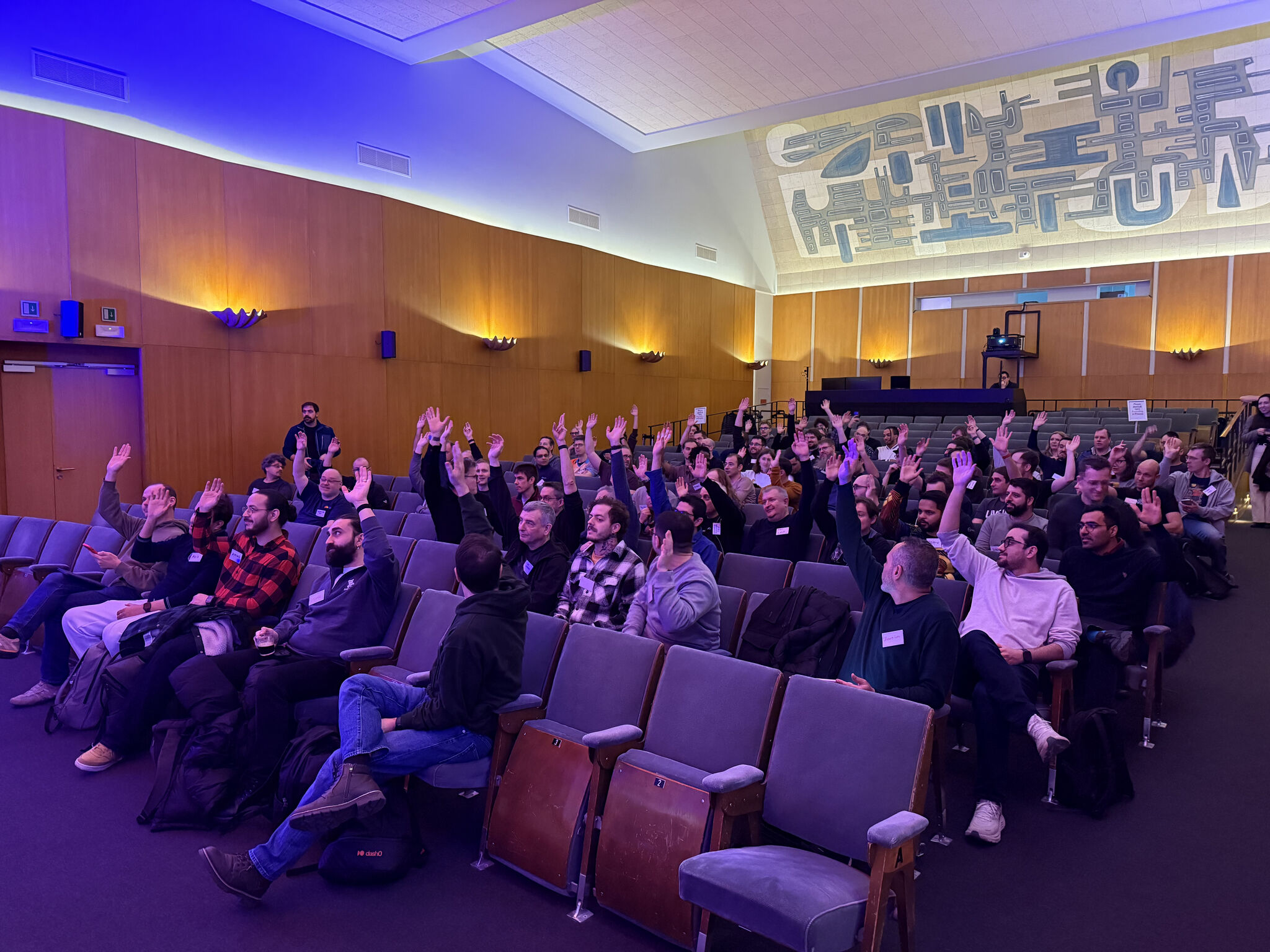
OTel Unplugged EU 2026 — crowd voting on sessions

OTel Unplugged EU 2026: Field Notes from the Instrumentation Frontier

Brussels Again, But Make It Unplugged The day after FOSDEM, about a hundred of us gathered at Sparks Meeting on Rue Ravenstein in Brussels for OTel Unplugged EU 2026 — an unconference dedicated entirely to OpenTelemetry. Purple stage lights, a mid-century auditorium with wood paneling, and the familiar buzz of people who spend their days thinking about telemetry pipelines. If you know, you know. The format is simple: no prepared talks, no slides. Morning session brainstorming, dot-voting on topics, then self-organizing into nine rooms across four breakout slots. You vote with your feet. If a conversation isn’t working, you move. It’s chaotic, it’s honest, and it produces the kind of discussions that polished conference talks rarely achieve. ...

February 20, 2026 · 10 min · 2115 words · map[email:kakkoyun@gmail.com name:Kemal Akkoyun]
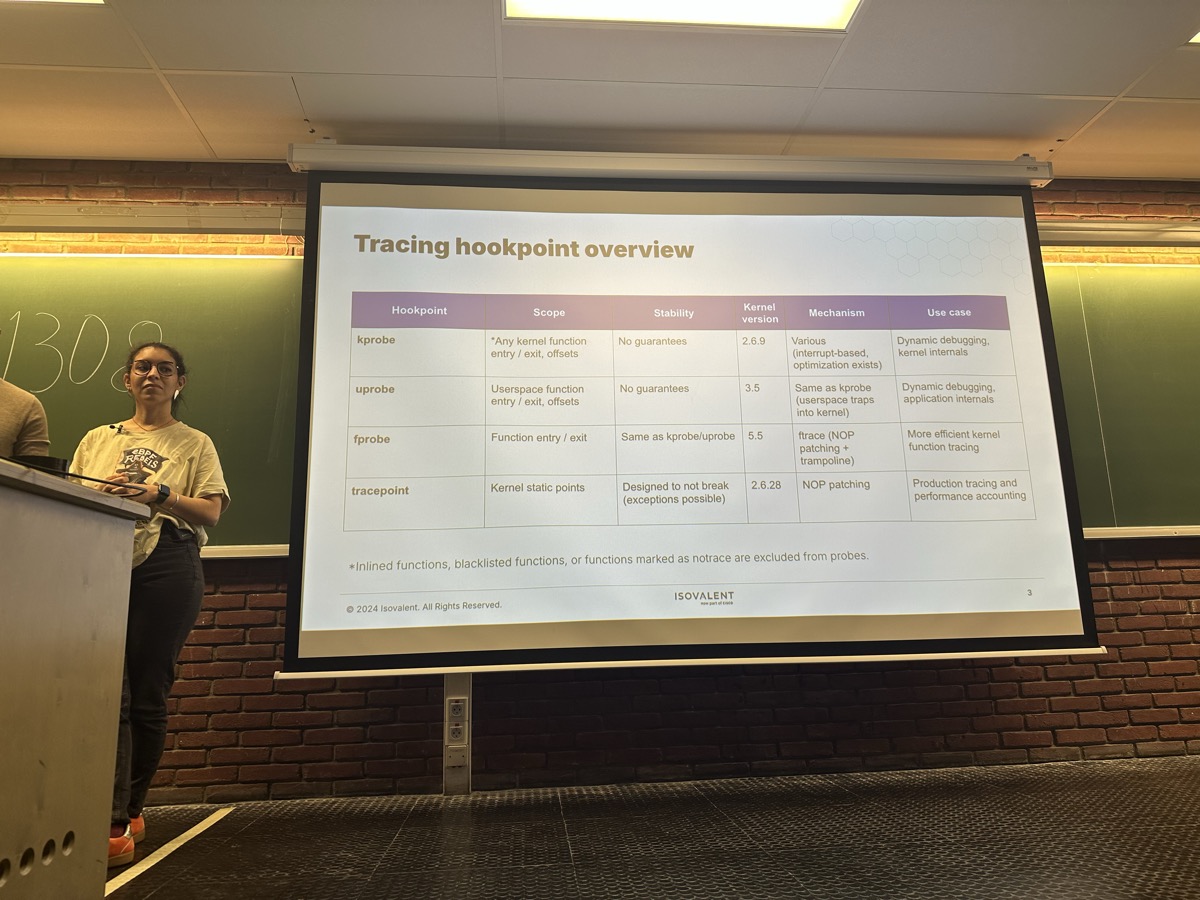
eBPF Devroom at FOSDEM 2026

FOSDEM 2026: Even Bigger, Even Better

Another Year, Another FOSDEM FOSDEM — the annual Brussels pilgrimage. If you’ve been, you know the drill: too many talks, too little time, questionable coffee, and the kind of conversations that only happen when you pack thousands of open-source developers into a university campus in the dead of winter. This year was different for me, though. Two talks in two devrooms, three sessions at OTel Unplugged — and this time, I brought the whole family. My wife and our toddler (who has graduated from “can barely walk” to “can absolutely destroy a hotel room in under four minutes”) came along, and we turned it into a proper trip — FOSDEM, then a few days exploring Ghent and Antwerp before heading home. ...

February 13, 2026 · 7 min · 1472 words · map[email:kakkoyun@gmail.com name:Kemal Akkoyun]
How to Instrument Go Without Changing a Single Line of Code

talk: How to Instrument Go Without Changing a Single Line of Code

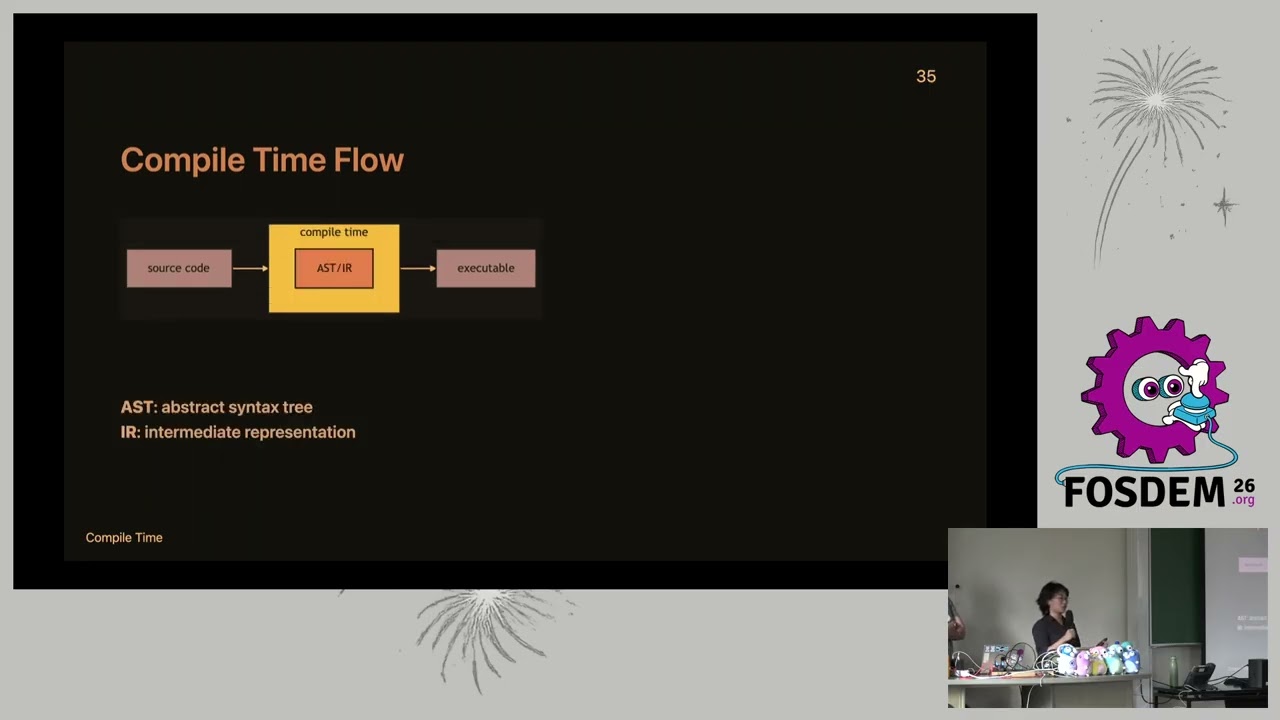
Zero-touch observability for Go is finally becoming real. In this talk, we walk through the different strategies you can use to instrument Go applications without changing a single line of code, and what they cost you in terms of overhead, stability, and security. We compare several concrete approaches and projects: eBPF-based auto-instrumentation using OpenTelemetry’s Go auto-instrumentation agent and OBI (OpenTelemetry eBPF Instrumentation), compile-time manipulation using tools like Orchestrion and the OpenTelemetry Compile-Time Instrumentation SIG, runtime injection via Frida/ptrace, and USDT (User Statically-Defined Tracing) probes — both via libstapsdt and a custom Go runtime fork. ...

February 1, 2026 · 1 min · 204 words · map[email:kakkoyun@gmail.com name:Kemal Akkoyun]
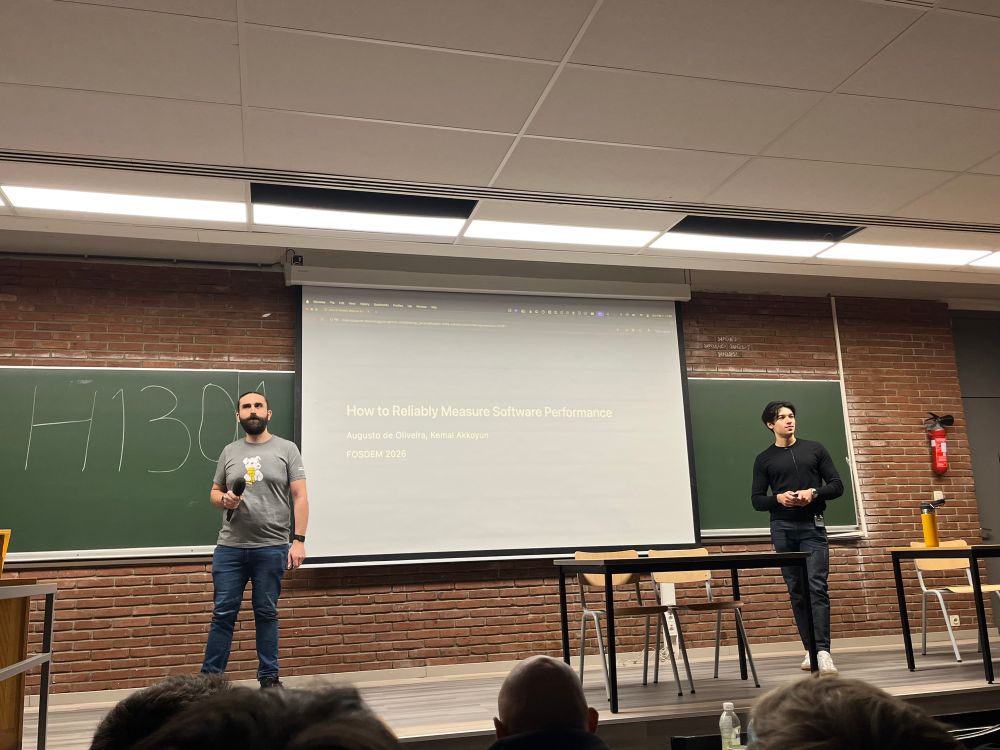
How to Reliably Measure Software Performance

talk: How to Reliably Measure Software Performance

Measuring software performance reliably is remarkably difficult. It’s a specialized version of a more general problem: trying to find a signal in a world full of noise. A benchmark that reports a 5% improvement might just be measuring thermal throttling, noisy neighbors, or the phase of the moon. In this talk, we walk through the full stack of reliable performance measurement — from controlling your benchmarking environment (bare metal instances, CPU affinity, disabling SMT and dynamic frequency scaling) to designing benchmarks that are both representative and repeatable. We cover the statistical methods needed to interpret results correctly (hypothesis testing, change point detection) and show how to integrate continuous benchmarking into development workflows so regressions are caught before they reach production. ...

February 1, 2026 · 1 min · 209 words · map[email:kakkoyun@gmail.com name:Kemal Akkoyun]