New here? The archive won’t tell you which posts are worth your time. Start Here will: curated reading paths through profiling and symbolization, eBPF and instrumentation, Go performance, and AI-assisted engineering.


Technical-Findings · · 7 min

My Second Brain System: PARA, Readwise, and an LLM captures my thoughts

At 9:14 a.m. on a Wednesday, I open the laptop. The daily briefing for today is already there. Above the fold: a Whoop recovery score of 62 (fine), a Wakatime row showing 4h 21m on the OpenTelemetry Go compile-time instrumentation repo yesterday, three GitHub PRs waiting on review, and a Things 3 task that has been sliding forward for nine days: Review that thing from X. Each previous day the task migrated, and the journal entry from that day is one click away. The reason it kept slipping is in those entries somewhere. ...

August 21, 2026 · 7 min · 1435 words · Kemal Akkoyun
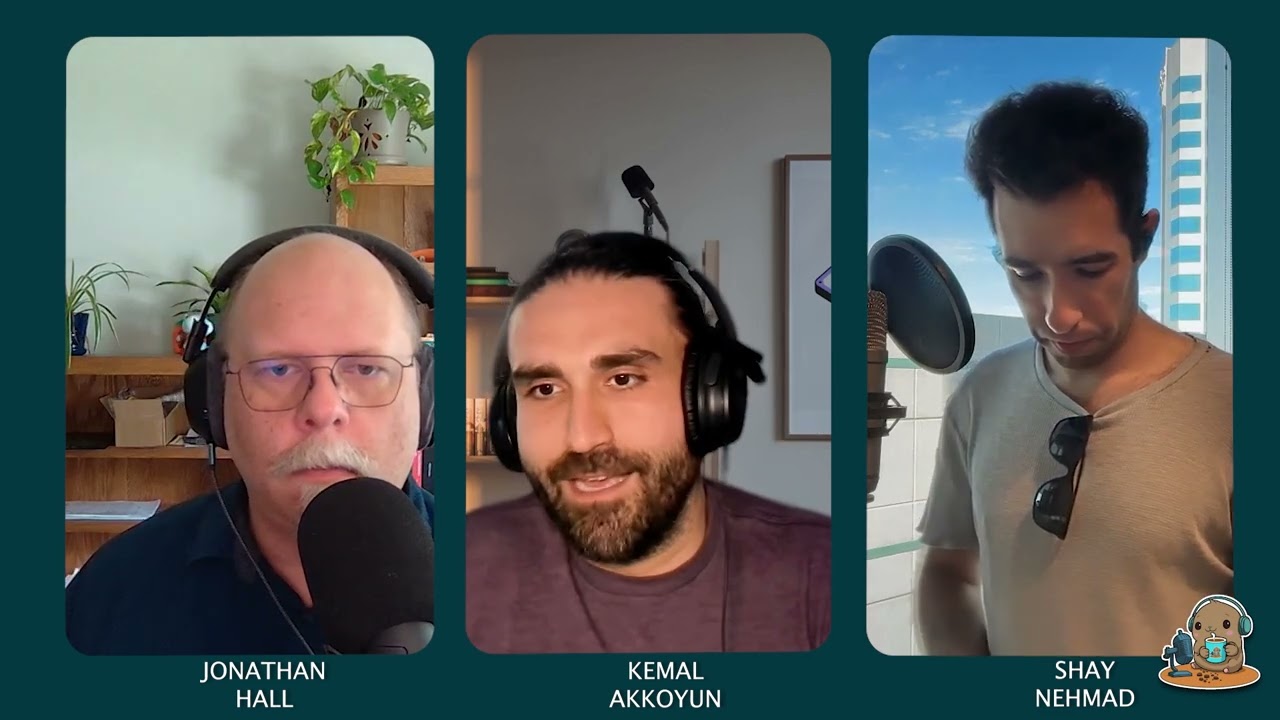
Jonathan Hall, Kemal Akkoyun and Shay Nehmad recording an episode of Cup o' Go
Talks · · 2 min

podcast: Cup o' Go — Instrumentation and Blast Radius

Jonathan Hall and Shay Nehmad had me on Cup o’ Go for episode 167, straight after their GopherCon US recap. We spent about forty minutes on instrumentation: what an APM tool is actually measuring, and the three ways you can get telemetry out of a Go program without asking every team to rewrite their handlers. The part I enjoyed arguing about most was blast radius. Manual instrumentation is precise and tedious, and it never finishes. eBPF buys you one agent covering every language on the box, at the cost of running code in the kernel, where a bad program can take the whole host down with it. Compile-time instrumentation rewrites the syntax tree behind go build through the -toolexec hook, which keeps failures scoped to one service and works anywhere Go compiles. People love this dark magic, which I find either reassuring or alarming depending on the day. ...

August 11, 2026 · 2 min · 336 words · Kemal Akkoyun
Engineering · · 7 min

OpenTelemetry Go Compile-time Instrumentation v1

Note This post was originally published on the OpenTelemetry blog on 2026-07-16. I wrote it for the OpenTelemetry community; this is a mirror on my personal blog with some added commentary. Why this milestone matters to me I have been involved with the Go Compile-Time Instrumentation SIG since it kicked off at the start of 2025, when Alibaba and Datadog decided to pool their efforts into a single vendor-neutral project. Watching it reach v1 last week felt genuinely satisfying — not because “v1” is a magic number, but because it marks the point where we stopped calling it experimental and started calling it something people should actually run in their builds. ...

July 22, 2026 · 7 min · 1434 words · Kemal Akkoyun
Bloomberg Engineering logo
Engineering · · 8 min

Mentorship in Open Source — Part 3: Stewardship Inside OpenTelemetry

The first post in this thread was about why I keep saying yes to mentorship. The second was the playbook for mentees. This one is for the people on the other side of the table: the maintainers, the SIG leads, the engineers in companies that depend on a project and are starting to wonder whether dependency is enough. The frame I’m borrowing comes from a piece my colleagues at Bloomberg published with the CNCF in March: Sustaining OpenTelemetry: Moving from Dependency Management to Stewardship (also on Bloomberg’s company stories). The phrase has stuck with me. It names something I’ve been trying to articulate for years, and gives me a concrete vocabulary for talking about what mentorship is for inside a project the size of OpenTelemetry. ...

June 5, 2026 · 8 min · 1552 words · Kemal Akkoyun
CNCF LFX Mentorship logo
Blogmentation · · 13 min

Mentorship in Open Source — Part 2: The Mentee Playbook

Last time I wrote about why I keep saying yes to open-source mentorship. This post is the how: specifically, how to be a mentee in 2026. I’ve spent the last few years on the mentor side of CNCF LFX LFX Mentorship — the Linux Foundation’s structured mentorship program. Cohorts run quarterly, projects are scoped to ~12 weeks, and mentees receive a stipend. , Google Summer of Code ( GSoC A Google-funded program where students contribute to open-source projects over the summer, paired with mentors from those projects. ), and GoBridge, through Thanos, Prometheus, and now OpenTelemetry projects. Every cohort I’ve run, the same questions keep coming up from people who want to apply but don’t know how to start. ...

May 29, 2026 · 13 min · 2576 words · Kemal Akkoyun