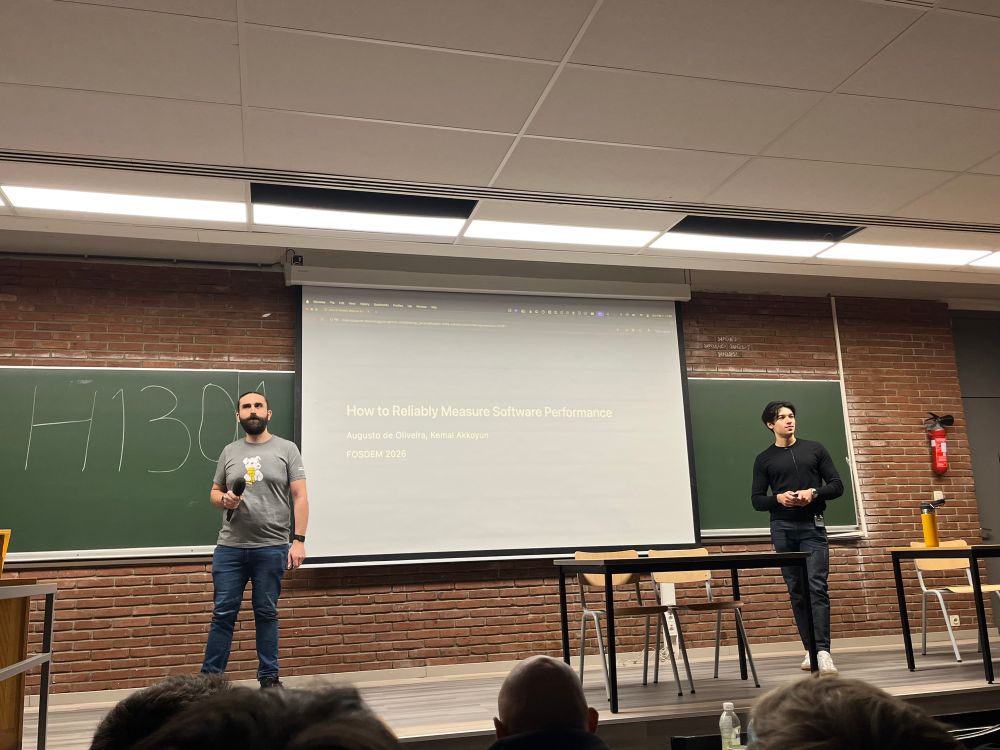
Measuring Software Performance

Measuring Software Performance: Why Your Benchmarks Are Probably Lying

A Loose Cable That Broke Physics In 2006, a team of physicists began building the OPERA experiment — a 730-kilometer underground tunnel from CERN in Switzerland to Gran Sasso in Italy, designed to measure the speed of neutrinos. Five years of construction. Roughly 100 million euros. The most rigorous experimental physics on the planet. In September 2011, the results came back. Neutrinos were traveling faster than the speed of light. The team had just broken the laws of physics. ...
March 6, 2026 · 13 min · 2681 words · map[email:kakkoyun@gmail.com name:Kemal Akkoyun]
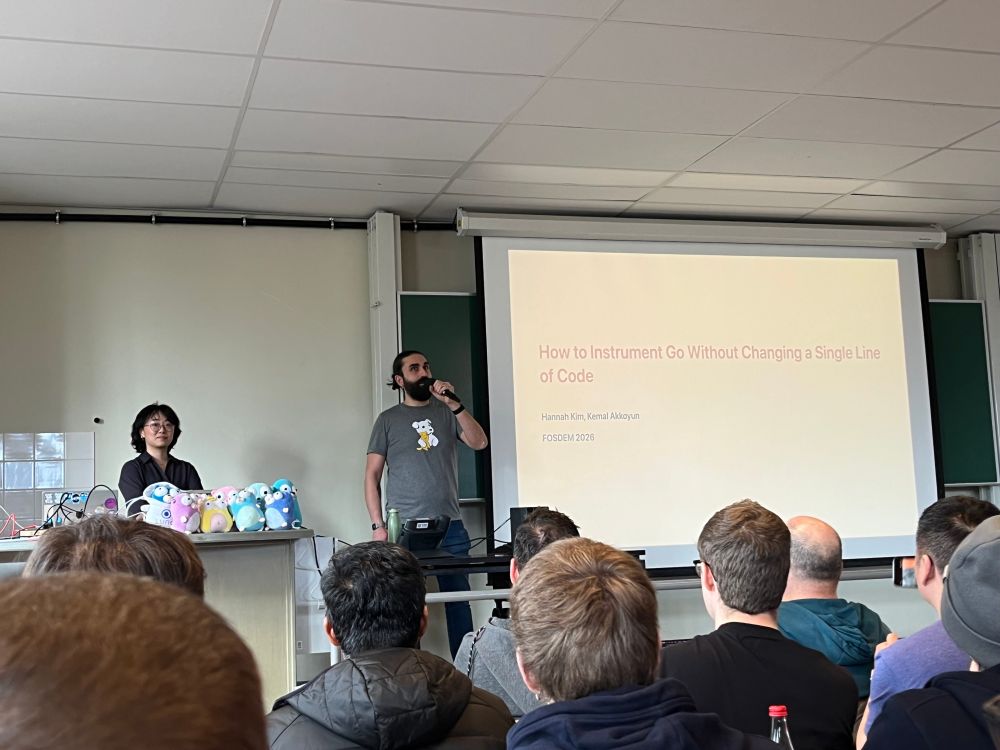
Auto-Instrumenting Go

Auto-Instrumenting Go: From eBPF to USDT Probes

This post expands on the FOSDEM 2026 Go Devroom talk I co-presented with Hannah S. Kim. The talk, demo code, and all benchmark scenarios are available in the fosdem-2026 repository. The Problem Go is one of the best languages for building production backend services. It compiles to native binaries, has excellent concurrency primitives, and produces predictable performance characteristics. But when it comes to auto-instrumentation — adding observability without modifying source code — Go is uniquely difficult. ...

February 27, 2026 · 12 min · 2385 words · map[email:kakkoyun@gmail.com name:Kemal Akkoyun]